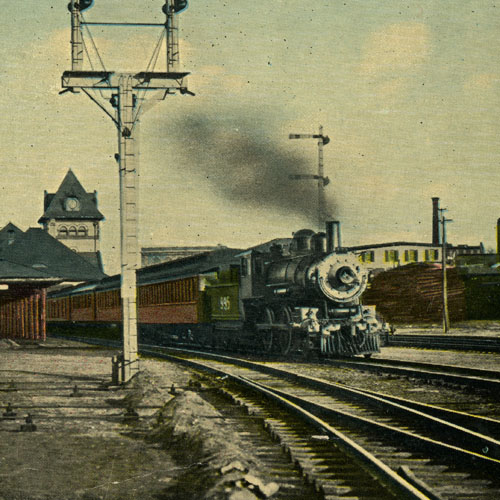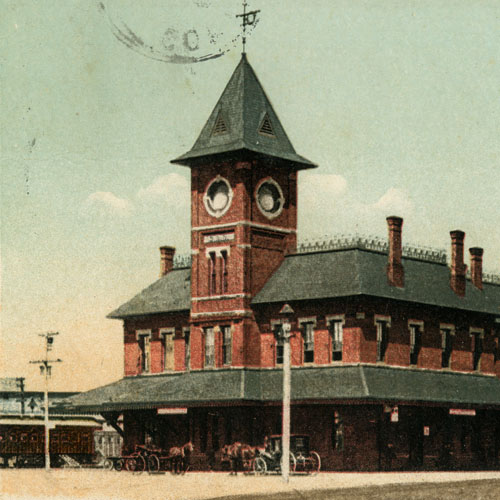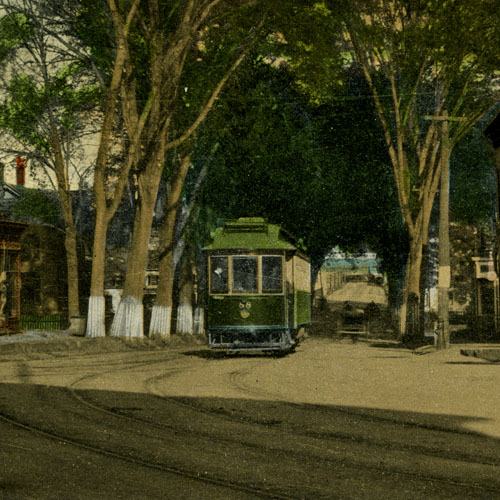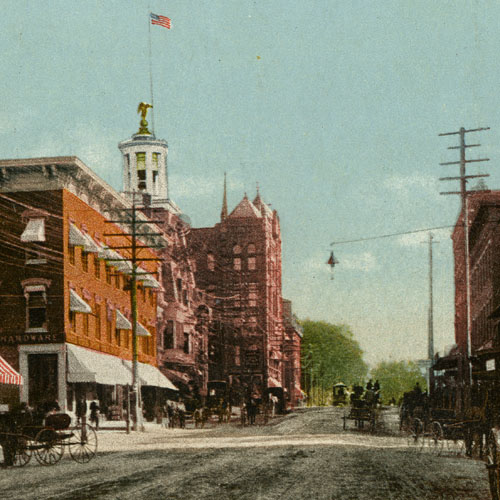
Concord, the state capital of New Hampshire, was once a major railroading center. The yards were full of maintenance shops for locomotive and car repair work, and the city had a 19 stall roundhouse. The icon of railroading in Concord was the grand railroad station, which served as the headquarters for the Concord Railroad and the Concord & Montreal Railroad.
The grand brick building was actually the city's fourth station. Built in 1885 and designed by the legendary Bradford L. Gilbert, who also designed Grand Central Station (predecessor to today's Grand Central Terminal) in New York City. Concord was a busy stop on the railroad, as during 1906 the Boston & Maine Railroad had 32 passenger trains in and out of the station. Inside the railroad had a Concord Coach on display in the waiting room. The stagecoach is now owned by the New Hampshire Historical Society.
The grand terminal was torn down in 1959, making way for a shopping plaza and a smaller passenger station was built a year later of the standard "McGinnis Era" design. Similar stations were also in Dover and Lowell. After passenger service was discontinued to Concord in 1967, the station was converted to a bus station and cab stop.
Passenger service came back, albeit breifly, when a government grant allowed for commuter rail to be tested for two years between Concord and Boston. In 1980, MBTA commuter trains could be found laying over in the Concord freight yard as well as experimental railbuses from England and Budd's new SPV-2000. Due to the grant running out, commuter service ended early in 1981.
Today the grand railroad station is gone, the McGinnis station was torn down in 1998 when the bus station moved to a new facility, the Concord Shops lay in ruin, and not much remains of the massive yards. Rail service in Concord is provided by New England Southern, which interchanges with Pan Am Railways down in Manchester. In addition to freight, New England Southern used to offer tourist train rides north up the Boston, Concord & Montreal line. Today the only passengers moved are those on the caboose train from Tilton when it comes down to Concord.

Concord's Railroad Stations
The below list is of the railroad stations located within the city limits. A special thank you is due to Gary LaPointe of Railroad Stations of New Hampshire for his support of Nashua City Station's railroad station listings with the use of images from his website.
Eastside
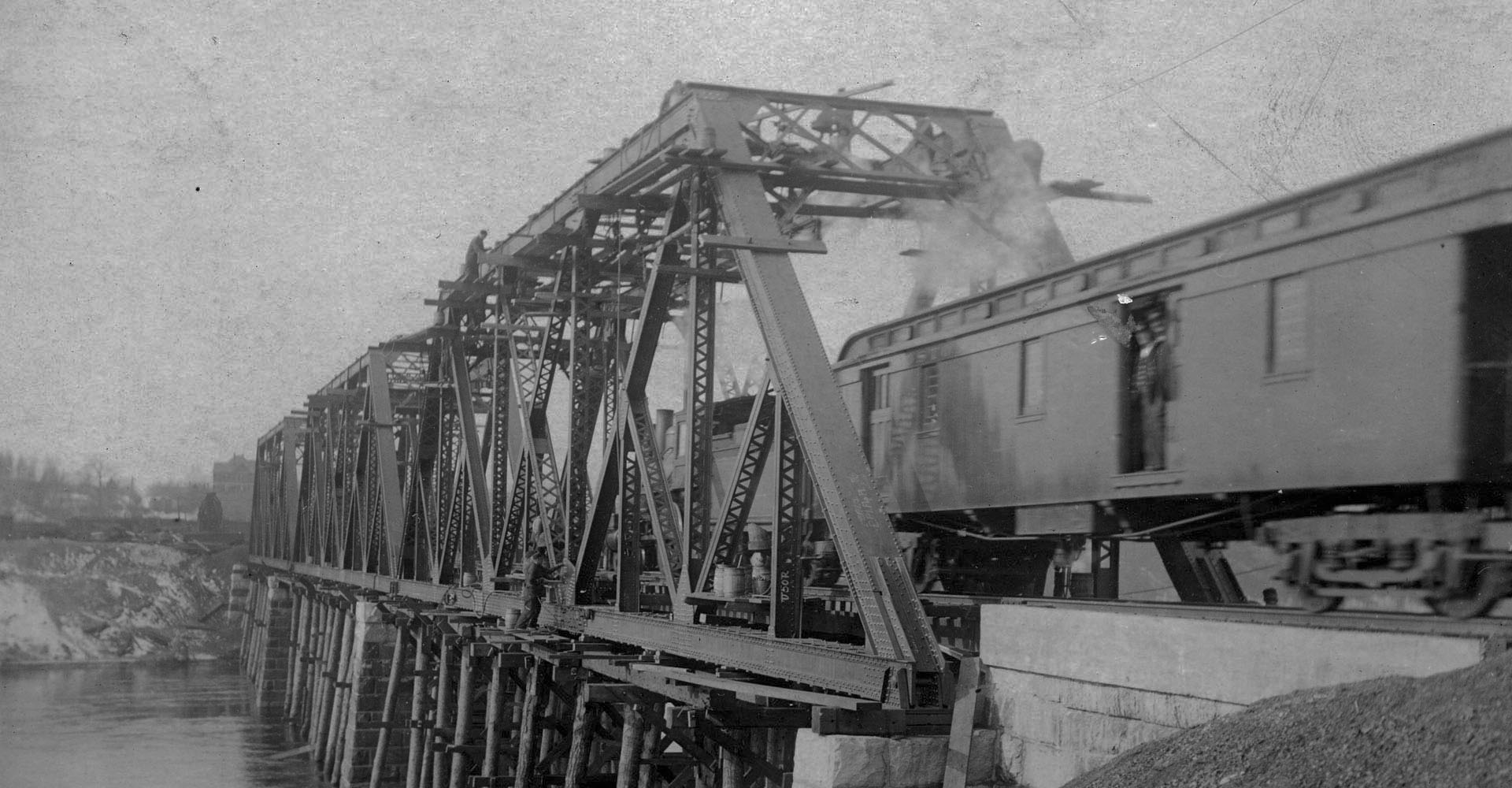
In East Concord, this ornate station was situated on the Boston, Concord & Montreal Railroad just north of the Merrimack River bridge. While the station no longer stands, the rail line is still used, owned by the State of New Hampshire.
Garrison
Located in West Concord on the Concord & Claremont line, trains of the Boston & Maine Railroad last rumbled past in 1981. Guilford Transportation Industries acquired the line when it purchased the Boston & Maine in 1983, formally abandoning the line in 1984. The depot no longer remains.
Mast Yard
The portion of the Concord & Claremont that this depot was located on was abandoned by the Boston & Maine Railroad in 1960 due to a flood control project that would have resulted in a costly relocation of the rail line. The name Mast Yard comes from the earlier days when ship masts were cut and gathered at this location. This depot no longer remains.
Penacook
Penacook is a village in the northern part of Concord situated on the Northern Railroad. Freight service up to Penacook lasted until 1990 and the rails remain in place today. While the passenger depot no longer stands by the tracks, the freight house still does at the end of Merrimack Street.
Riverhill
The portion of the Concord & Claremont that this depot was located on was abandoned by the Boston & Maine Railroad in 1960 due to a flood control project that would have resulted in a costly relocation of the rail line. This station once stood at the railroad crossing on Carter Hill Road, but has been relocated nearby.
|